
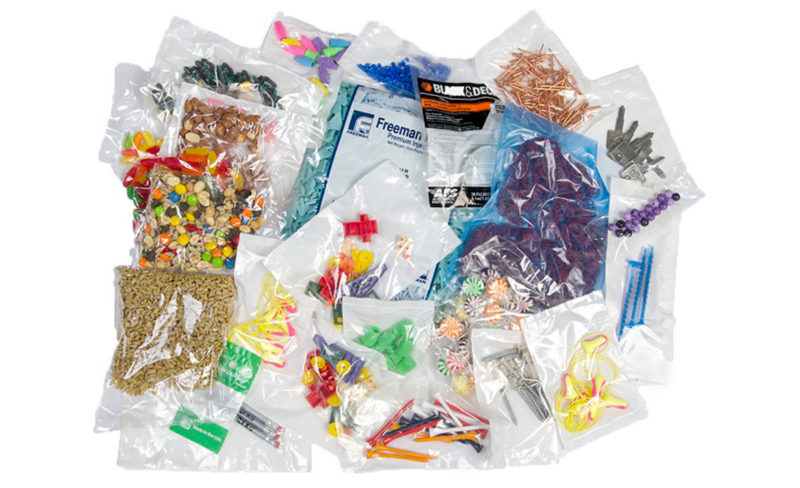
Flat Poly Bags Made of PE Film for Industry and Shipping
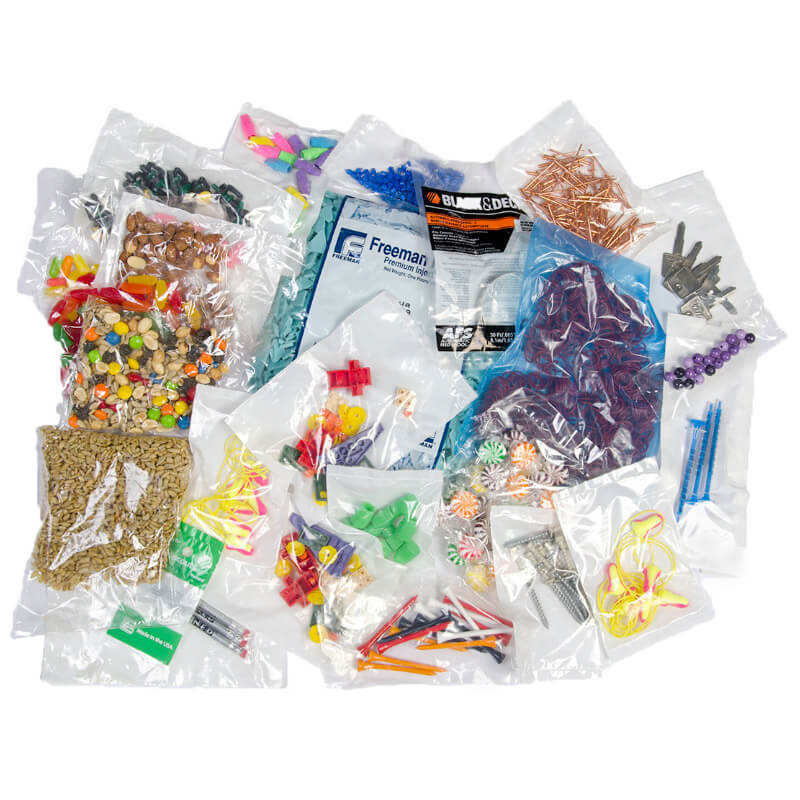
Flat poly bags consist of two welded film layers without a side gusset and without a bottom seam. Since not a single gram of film disappears into folds or a standing base, they are the most material-efficient pack in the plant. No other bag shape costs less per packaging unit. Your goods lie flat, and the open side stays accessible until the moment of sealing.
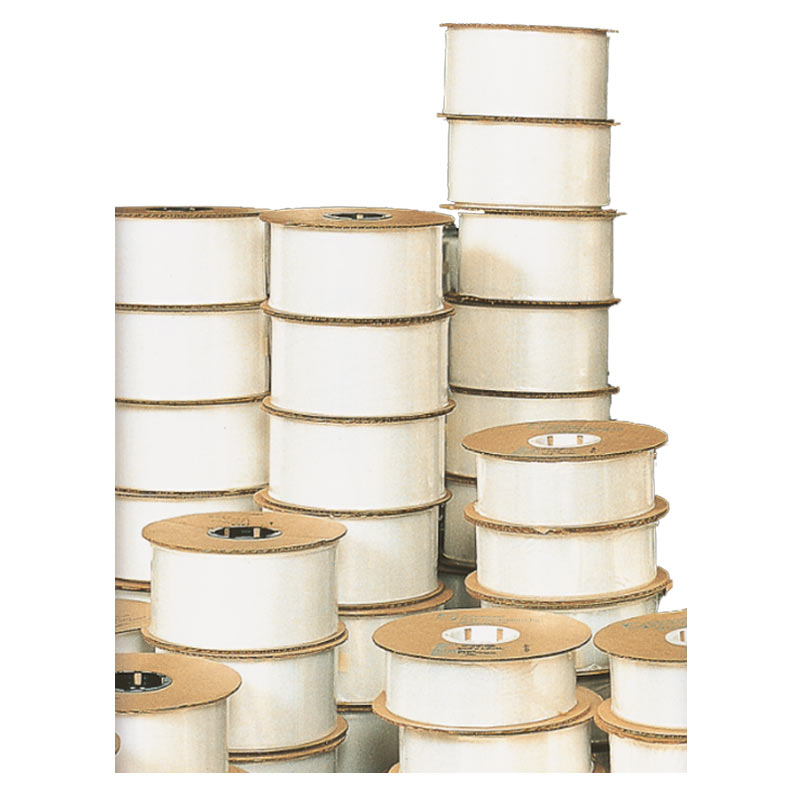
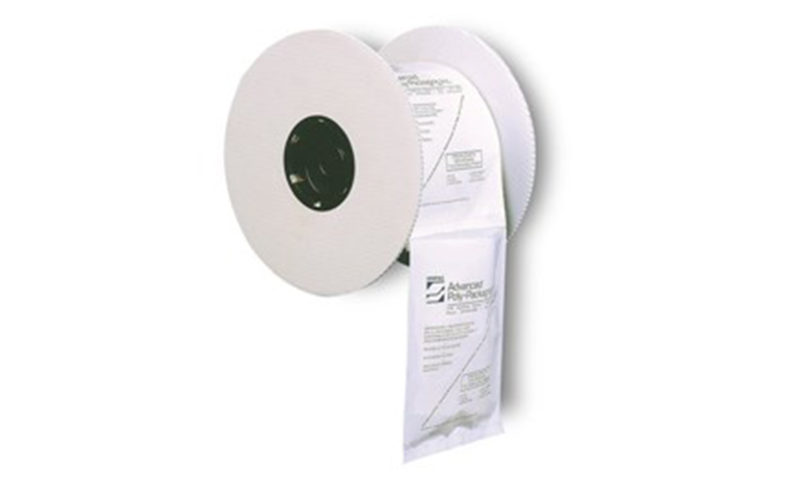
BagMatic supplies flat poly bags in two forms. Loose bags suit a manual workstation and fluctuating quantities. Once volumes rise, flat poly bags on rolls feed straight into the machine as pre-opened chain bags, which it fills and seals in one pass. That roll format is the precondition for every kind of automation. How broad the film program behind it is becomes clear in the bags and foils range.
Flat poly bags run from a small screw-bag format up to carton-sized cuts. Film gauges between 30 and 100 microns cover most applications, and special formats are produced to measure. For heavy, sharp-edged or oily parts we carry reinforced industry bags that survive repeated handling.
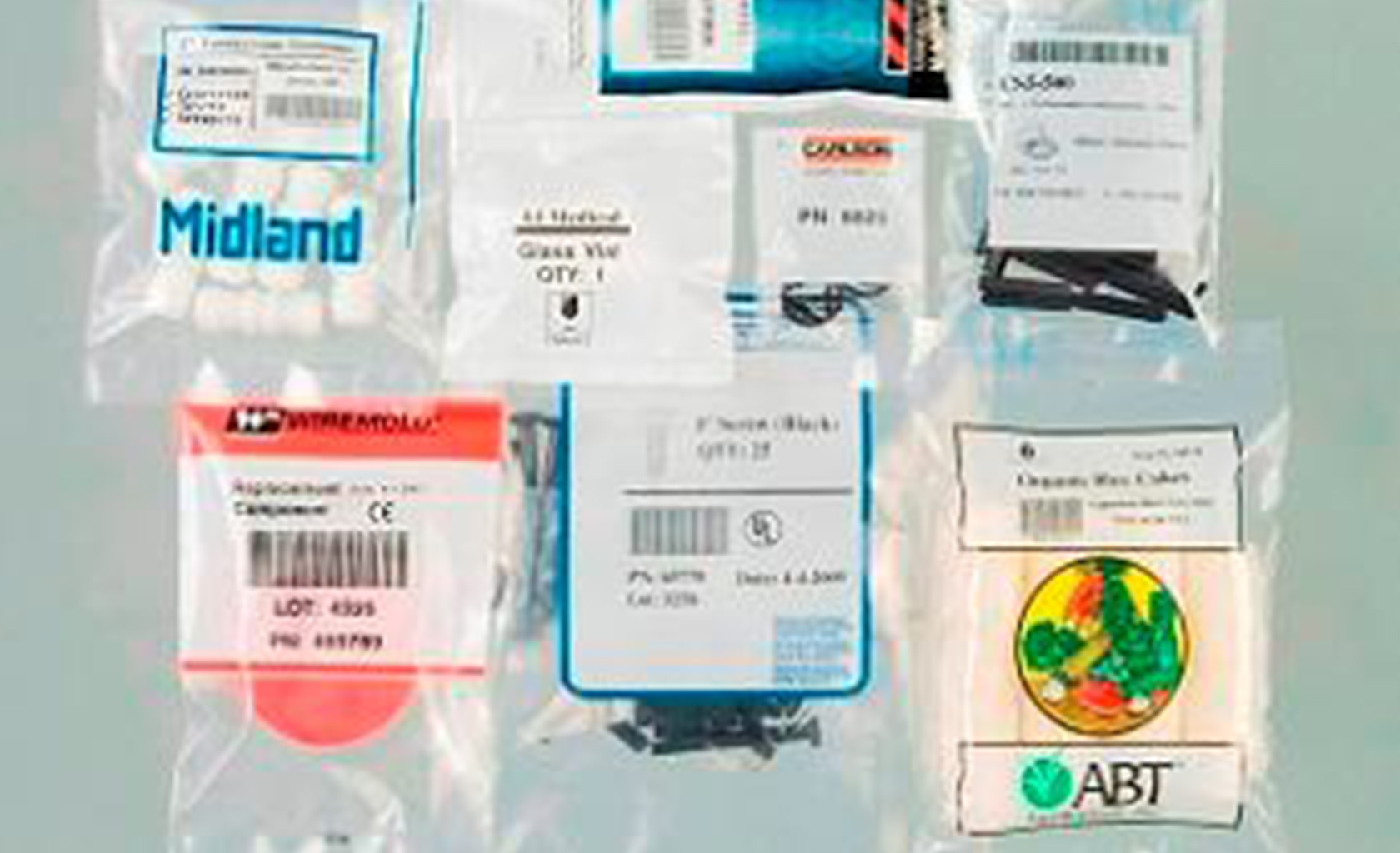
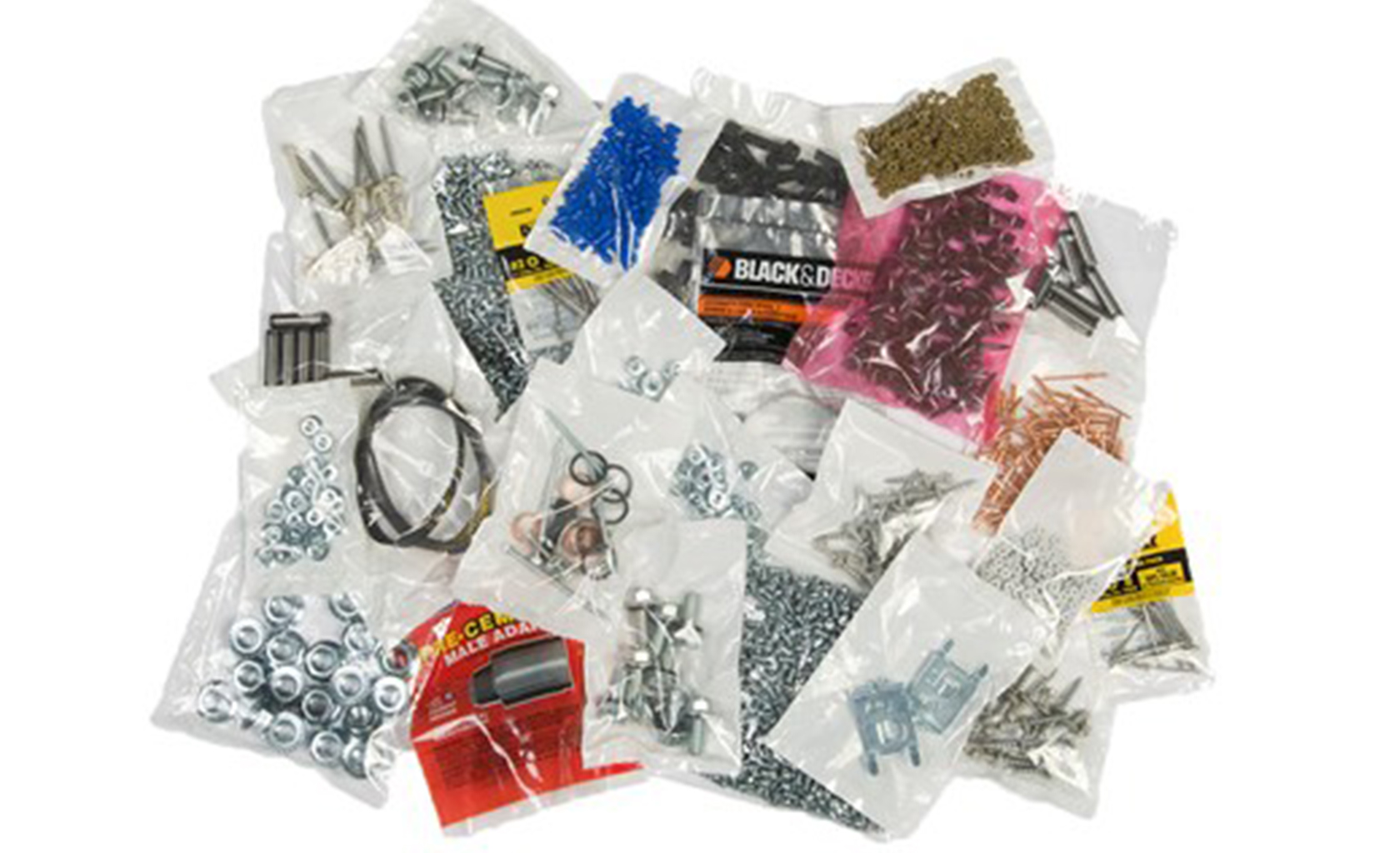
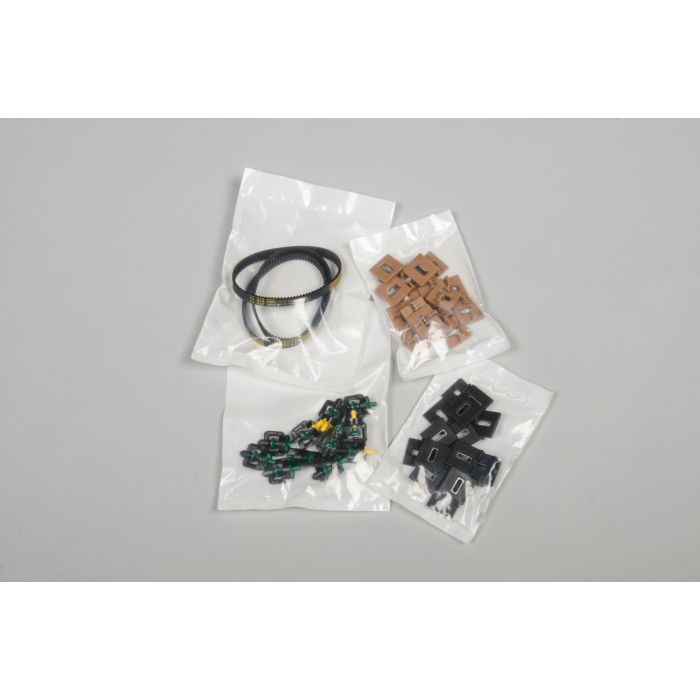
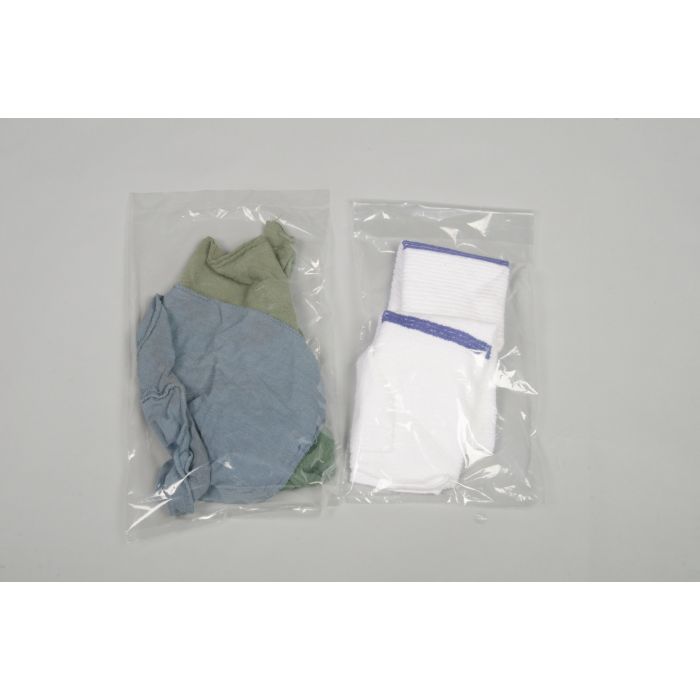
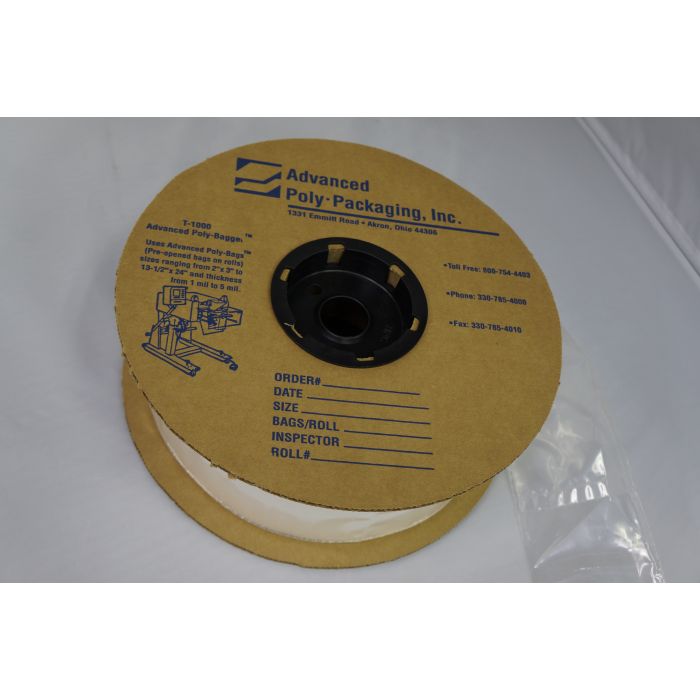
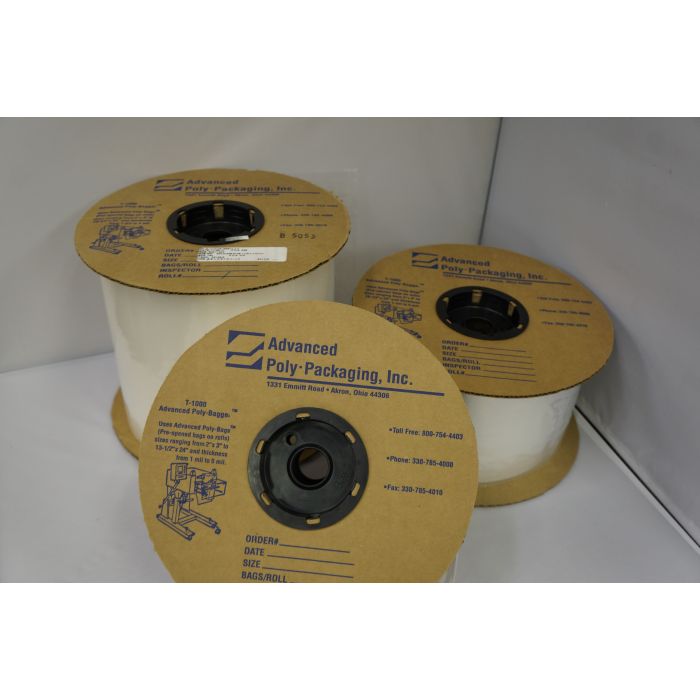

Order your flat pouches from BagMatic now:
We also have the right packaging machines (click here).
Clear Flat Poly Bags for a Free View of the Goods
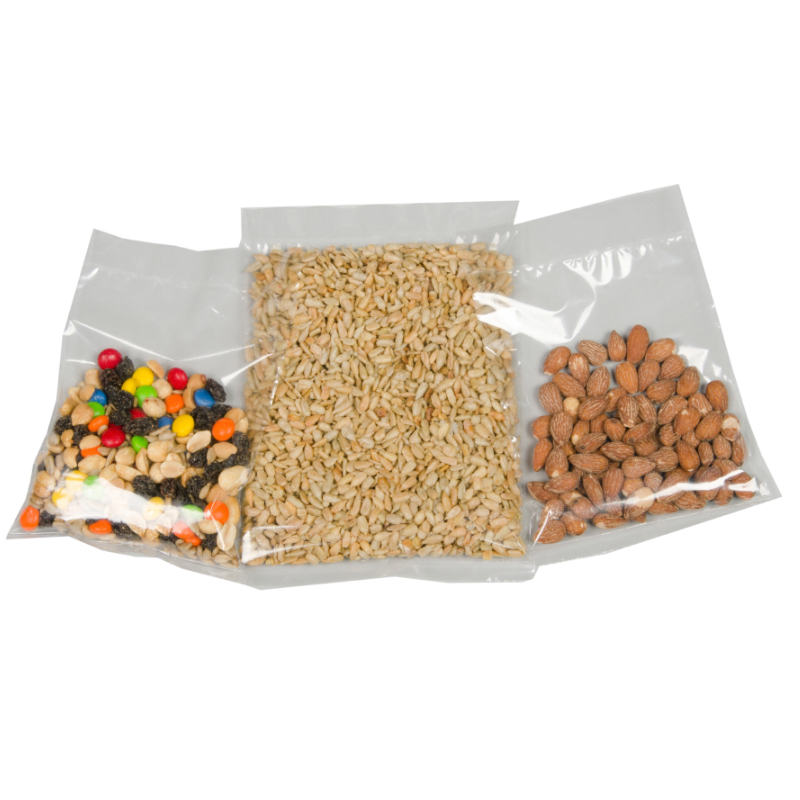
Visual inspection at goods receipt, picking by eye, scanning a label straight through the film. A clear film saves every second movement in daily practice, because nobody has to open the pack to identify what is inside. Clear flat poly bags in standard quality do exactly that job in the warehouse and on the assembly line.
What matters here is film quality rather than gauge. High-clarity material shows barely any haze, does not block and separates cleanly from the stack or the roll. Milky budget film costs time as soon as barcodes stop scanning reliably. Good flat poly bags stay clear even after months on the shelf.
Where a logo, part number or warning notice belongs on the film itself, we supply multicolor custom bag printing.
Where you buy also decides what the product is called. Flat plastic bags and poly bags almost always mean the same polyethylene format rather than a different construction. This variety of names regularly causes duplicate orders and dead stock in procurement. North American catalogs list the identical product as lay flat poly bags. So check the material, the gauge and the inner dimension instead of the product name before you trigger a repeat order. Flat polypropylene bags, by contrast, really are a different material family with a stiffer feel and a higher sealing temperature.
Protection From Dust, Moisture and Abrasion in Daily Warehouse Use
Metal parts rub against one another in the transport container, electronics attract dust, turned precision parts develop surface rust in humid air. Simple flat poly bags interrupt all three effects without moving your goods into a rigid pack. A gauge of 50 microns already keeps dust and splash water out reliably.
Where food contact applies, Regulation (EU) No 10/2011 comes on top. Anyone packing baked goods, confectionery or seed needs documented qualities with a declaration of conformity, not just any clear film. We supply matching flat poly bags together with the required paperwork. Our team looks after businesses from pharma, food and cosmetics and knows these obligations from daily work.
Electronic components add electrostatic charge to the list. Because film charges up as it is pulled off, a component takes damage long before anyone notices. In our packaging lines, a dedicated assembly neutralizes static electricity before the part drops into the bag. Pure bag distributors cannot cover that step, since they have no access to the machine.
LDPE or HDPE? What the Difference Means for Your Goods
Both materials are simply called polyethylene in everyday use, yet they behave differently in processing. LDPE is soft, stretchable and seals at low temperature. HDPE turns out stiffer and thinner and brings more tear strength at the same weight. Material choice therefore decides seam strength, consumption and machine running. This overview matches the properties to typical uses:
| Property | LDPE | HDPE |
|---|---|---|
| Feel | soft, supple | stiff, rustling |
| Clarity | high, glossy | milky |
| Tear strength | medium, but stretchable | high at low gauge |
| Typical gauge | 50 to 100 microns | 20 to 40 microns |
| Suited to | small parts, electronics, shipping | bulk goods, light mass parts |
LDPE flat poly bags are the right choice for most operations, because the seal holds safely even at high cycle rates and the film gives way during filling. HDPE pays off wherever every gram per pack counts and the parts are light.
Once a line runs continuously, sealing temperature decides your scrap rate. A seam run too hot turns brittle and tears open. Our technicians therefore set your machine to the delivered film gauge during commissioning. Anyone looking to cut plastic consumption should also review the biodegradable grade in the program. It replaces conventional flat poly bags one to one and runs on the same equipment.
Flat Poly Bags and the Matching Packaging Machine From One Source
Filled by hand, flat poly bags cost between 3 and 8 seconds of working time depending on the article. A table machine opens the chain bag, fills it and seals it in a single pass, while industrial machines reach three-digit output per minute. From roughly 300 packs a day, the switch usually pays for itself within a year. How much throughput you really need becomes clear in the overview of the bag filling machine.
This is exactly where we differ from a pure bag shipper, because film and machine come from the same house and are matched to each other. The company is family-owned in its third generation and holds an official Advanced Poly Packaging partnership. Entry-level standard machines are available in the low four-figure range, and both new and refurbished units are held in stock.
Would you like to order flat poly bags and have us check at the same time whether automating your packing station pays off? Send us the article, the quantity and your preferred format, and you receive a quotation including a film recommendation. We test your parts beforehand at our test center in Neuwied. Should a service case arise, our department reacts within two working days, on site across Europe as well.